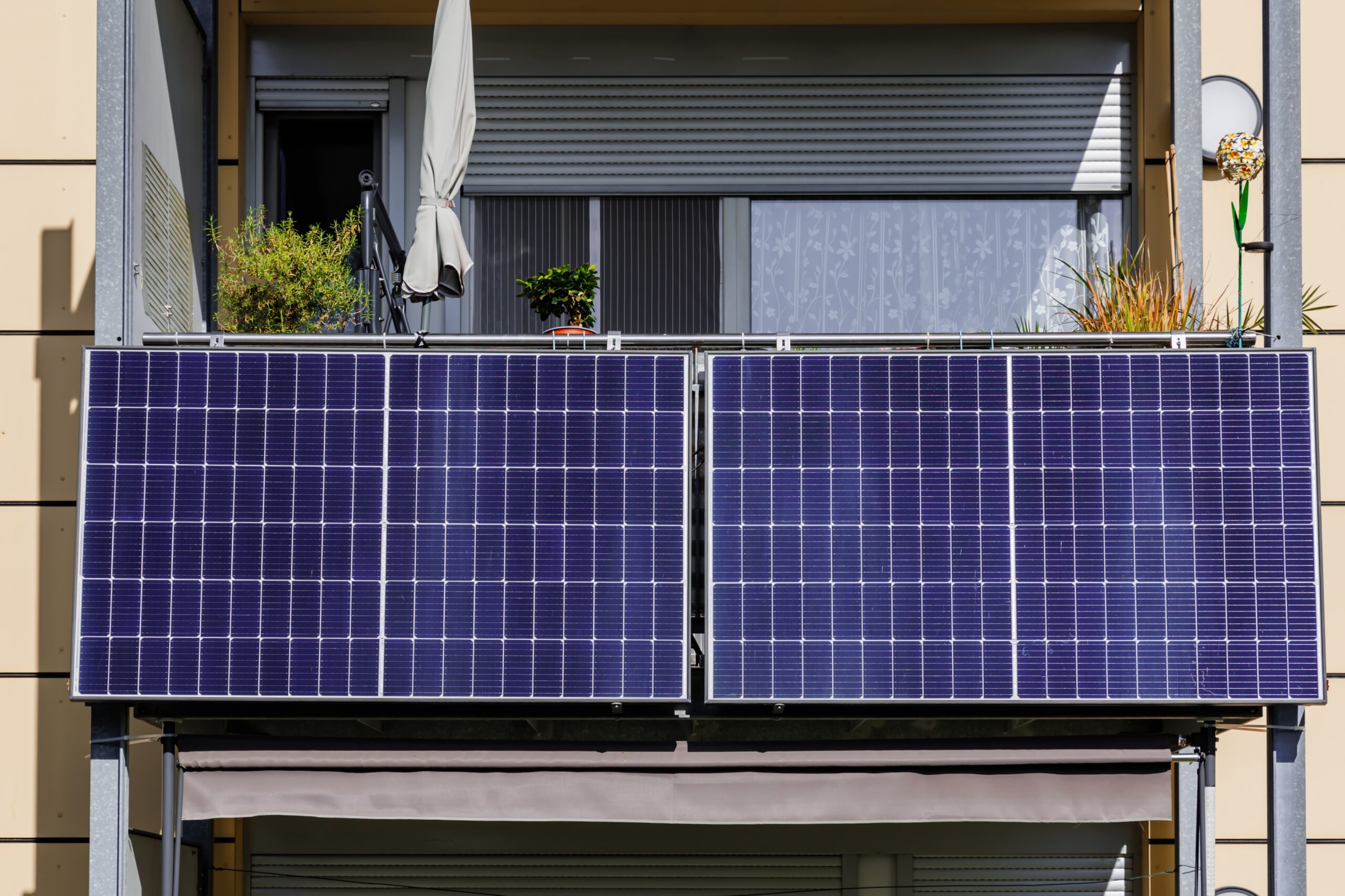
People are taking an interest in balcony solar, also known as plug-in solar, to help lower their bills. This trend is reflected in many states introducing and passing bills to permit balcony solar’s installation (Figure 1). Much of this interest may be arising as residential electricity consumers are facing ever-higher bills, and balcony solar provides a degree of energy sovereignty while decreasing on-bill prices.
Figure 1: States That Have Introduced Balcony Solar Legislation
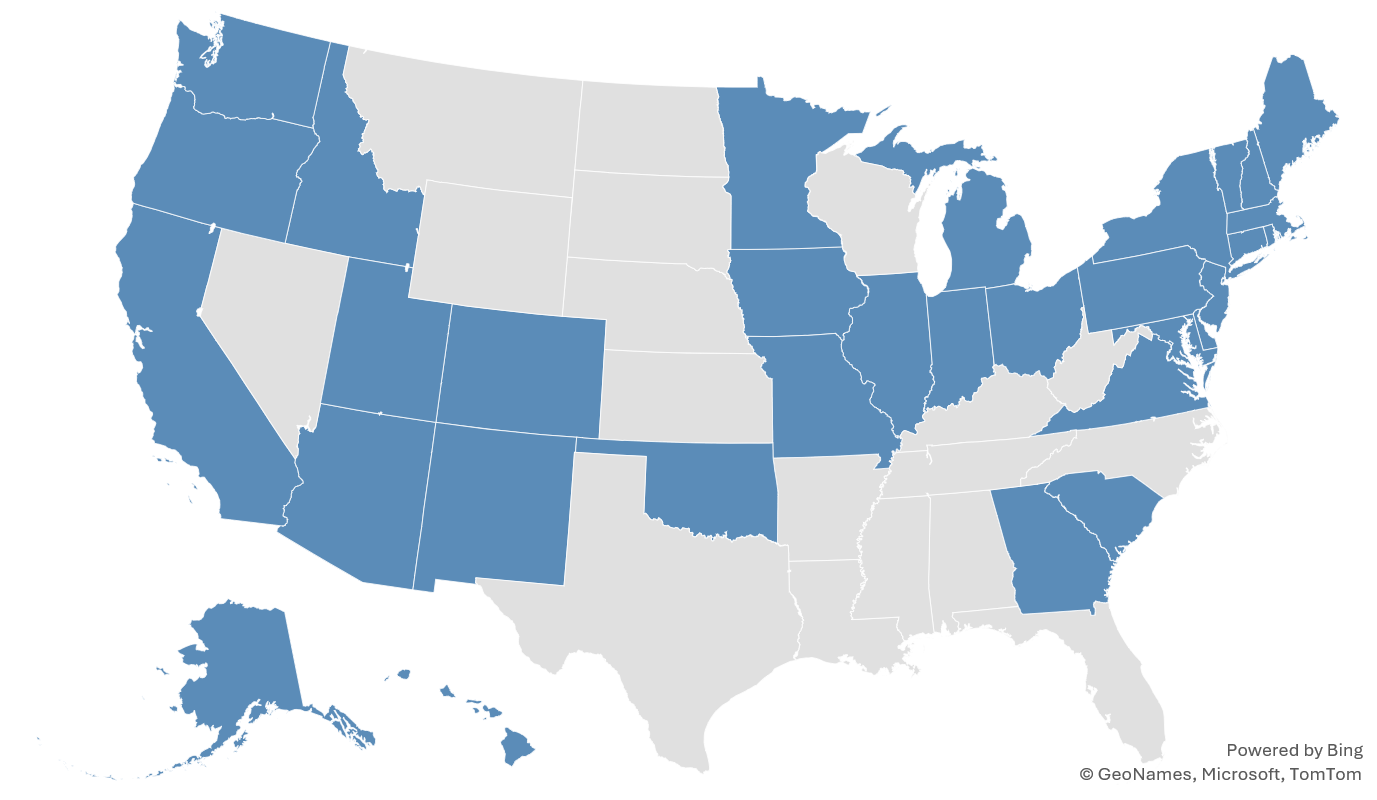
The District of Columbia has also introduced a balcony solar bill.
Sources: Canary Media and Atlas Buildings Hub Spotlight States Dashboard.
Most of the nation has seen a balcony solar bill on its slate this year. While only two states, Maine and Utah, have signed balcony solar bills into law this year, they have been introduced in thirty-three states and the District of Columbia. These bills are making progress in Colorado, Maryland, Massachusetts, New Hampshire, New Jersey, Oklahoma, and Virginia, where they have passed at least one legislative chamber. Eight states—Arizona, Georgia, Idaho, Indiana, New Mexico, Oregon, Washington, and Wyoming—have deferred this legislative session’s bills, where they may be reconsidered in a future session.
Balcony solar systems are commercially available photovoltaic systems that are easily set up without a professional’s help via hanging panels on a balcony and plugging them into any standard outlet. The apparatuses range in number of panels, although most states are considering setting that benchmark at 1,200 watts. The electricity production from these relatively small systems is not insignificant—Canary Media notes that an 800-watt system can power a few small appliances or a large appliance like a fridge. Over the course of a year, that can amount to hundreds in savings, for a one-time cost of between several hundred to a couple thousand dollars. These systems are also much more accessible than residential rooftop solar panels, both from sticker price and physical allowance perspectives.
The focus on this technology may be driven by energy affordability concerns. Several bills cite affordability in their titles or descriptions—for instance, Maine’s balcony solar bill is titled “An Act to Make Small Plug-in Solar Generation Devices Accessible for All Maine Residents to Address the Energy Affordability Crisis,” Maryland’s is titled the “Affordable Solar Act,” and Wyoming’s was titled “Affordable electricity act of 2026.” Local articles detailing the journeys of these bills through their legislatures also cite affordability as a key concern, including coverage from The Colorado Sun, The Oregonian, MinnPost, and an opinion piece from the Kansas City Star.
Some utilities are concerned that the do-it-yourself nature of balcony solar could lead to problems. A representative from Rocky Mountain Power noted in a WyoFile article that balcony solar systems could potentially overload residential wiring systems, opening the door to electrical fires. Although the head of the state’s rural electric co-op association said these problems were surmountable, Wyoming’s bill allowing the technology ultimately did not move forward this session. Similarly, Arizona’s balcony solar bill died in committee after testimony from an electric co-op that the panels could lead to sudden load spikes difficult for grid operators to monitor swayed the committee’s chairwoman to hold the bill.
Despite the obstacles, the widespread introduction of these bills shows that residents want energy affordability, accessibility, and sovereignty, and legislators across the political spectrum are willing to look to solar to give it to them.