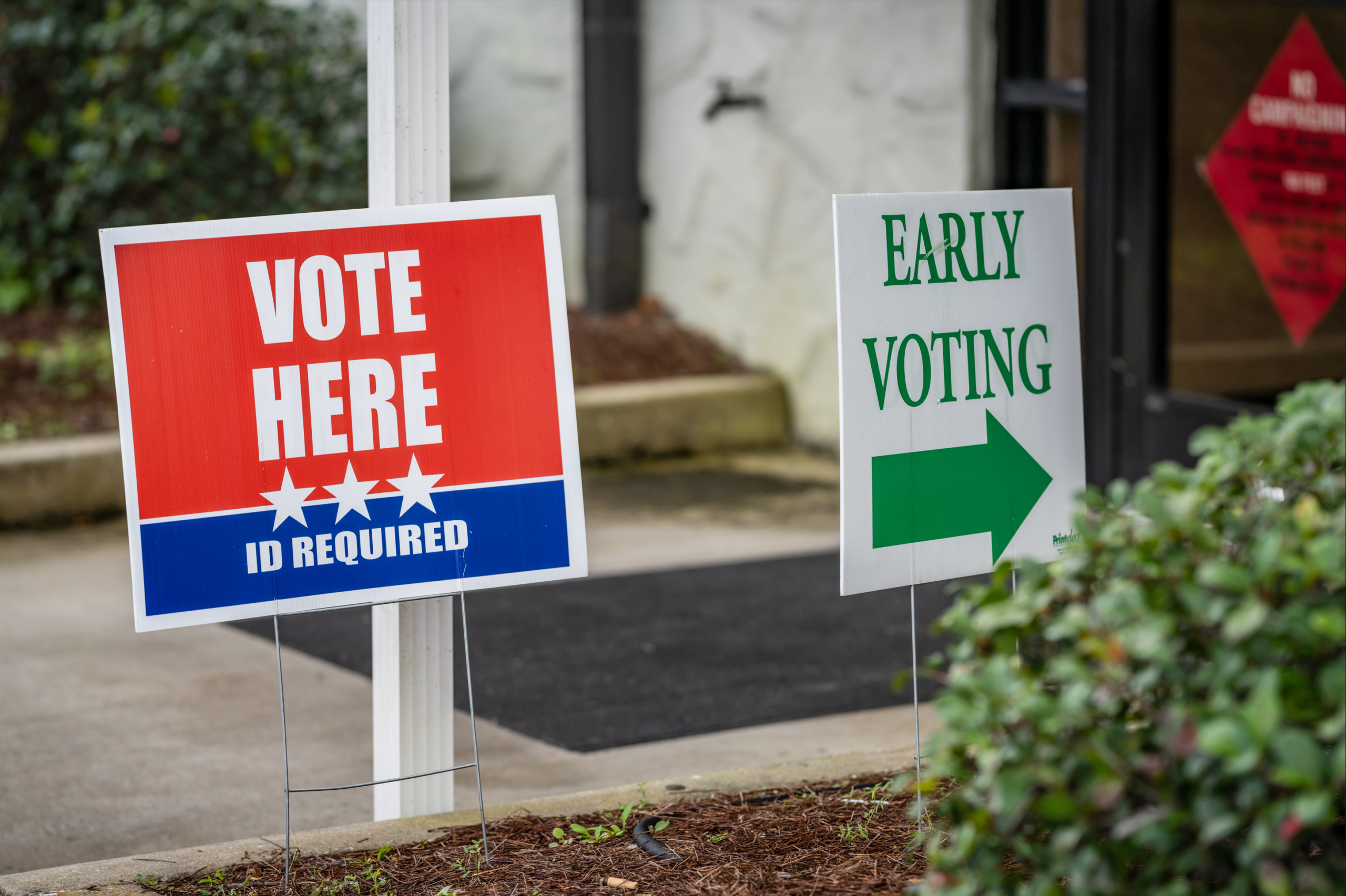
Yesterday, voters in Alabama, Georgia, and Oklahoma voted in primary elections for their states’ Public Utility Commissions (PUCs). They live in three of the ten states and one territory (Guam) in the United States where PUC commissioners are directly elected to regulate utilities operating in their jurisdictions. Of the 11 PUCs in the United States that are elected, ten are holding PUC elections this year; most other states’ commissioners are appointed by the state’s governor, while in South Carolina and Virginia, they are appointed by the state legislature (Figure 1). Note that all service and utility commissions will be referred to as PUCs in this digest.
Figure 1: States Holding PUC Elections, 2026
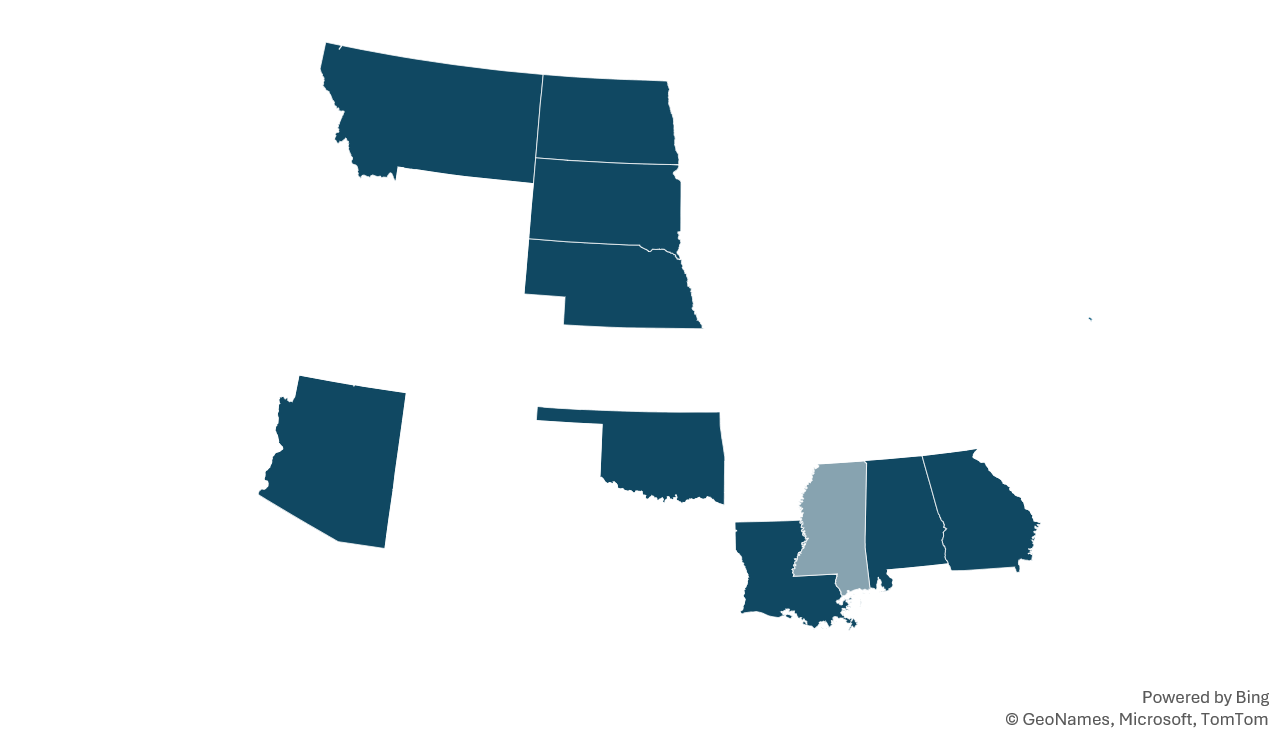
States that are holding PUC elections in 2026 in dark blue. Guam is holding elections for its PUC in 2026 but is not represented on this map. Mississippi holds PUC elections but is not holding an election in 2026.
Source: Ballotpedia.
In total, 18 elected PUC seats are up for election this year (Table 1). Every state holding PUC elections this year allows commissioners to run with a political party. Guam’s elected PUC is nonpartisan. Illinois also has a commission with party identification despite its commissioners being appointed by its governor; it is the only PUC nationwide that has a political party association with a Democratic majority. This year, most commissions are unlikely to change hands, but two states’ partisan balances have the potential to flip as an energy affordability crisis introduces significant uncertainty into elections in Georgia and Louisiana.
Table 1: Partisan Splits and Open Seats in PUC Elections, 2026
| State | Partisan Split | Seats Up for Election |
| Alabama | 3R – 0D | 2 |
| Arizona | 5R – 0D | 2 |
| Georgia | 3R – 2D | 2 |
| Guam | Nonpartisan commission | 3 |
| Louisiana | 3R – 2D | 2 |
| Montana | 5R – 0D | 2 |
| Nebraska | 5R – 0D | 1 |
| North Dakota | 3R – 0D | 2 |
| Oklahoma | 3R – 0D | 1 |
| South Dakota | 3R – 0D | 1 |
PUCs either have three, five, or seven seats.
Source: Ballotpedia.
These elections are bound to have major consequences for the current energy landscape. PUCs make important decisions on what you pay for your utility bills and what utilities can spend and recover costs on. Utilities propose new spending projects or plans to PUCs, and request rate increases to recoup their costs plus a profit margin—see this previous Buildings Hub digest for more detail. According to the Center for American Progress and Natural Resources Defense Council’s Electricity and Natural Gas Utility Rate Hikes Tracker, utilities in the states with PUC elections have requested rate increases ranging from $1.43 per month (a 3.5 percent increase from the City of Mesa, Arizona’s municipal utility, which went into effect in January 2026) to $25.13 per month (a 25 percent increase from South Dakota’s Black Hills Power, to take effect in August 2026 if approved). These issues have arisen in races from Arizona to Georgia. Regardless of their results, the makeup of state PUCs is going to play a major role in the energy affordability conversation for the foreseeable future.