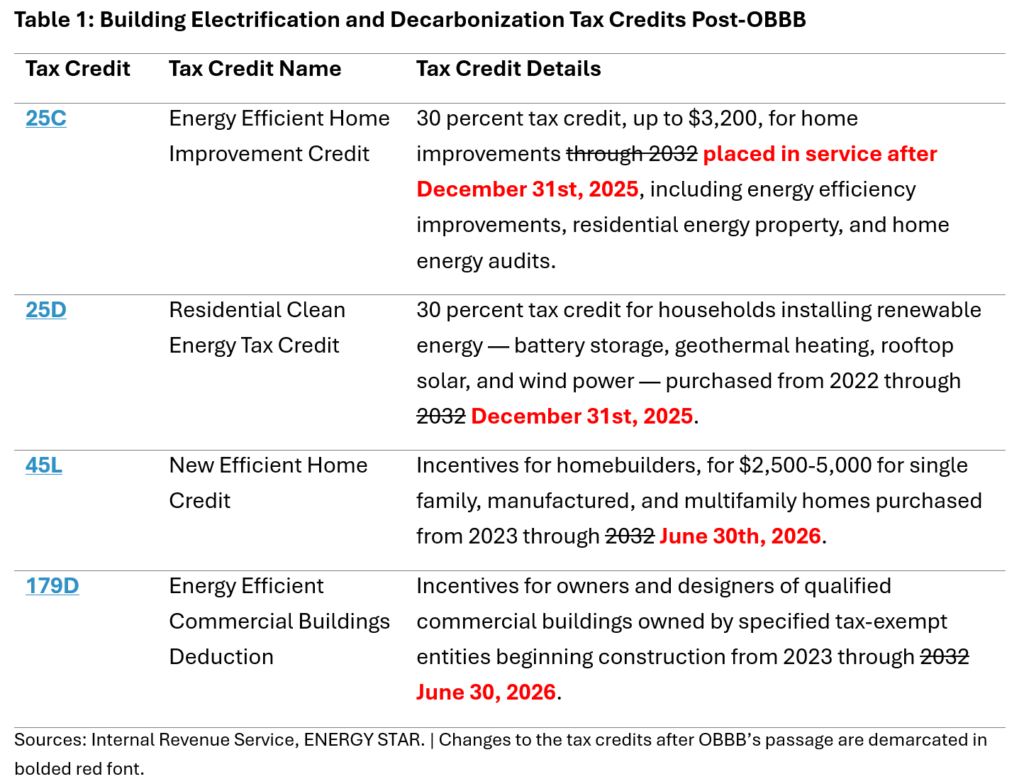
Homeowners, building owners, and contractors nationwide are racing to capture cost benefits from the Inflation Reduction Act (IRA) before they expire. All four buildings-related tax credits embedded in the IRA came under threat throughout the budget reconciliation process, as detailed in a previous digest on available building decarbonization funding. All four had their lifetimes cut by the bill that came out of that process, the One Big Beautiful Bill Act (OBBB). Table 1 describes the changes to the tax credits from OBBB.
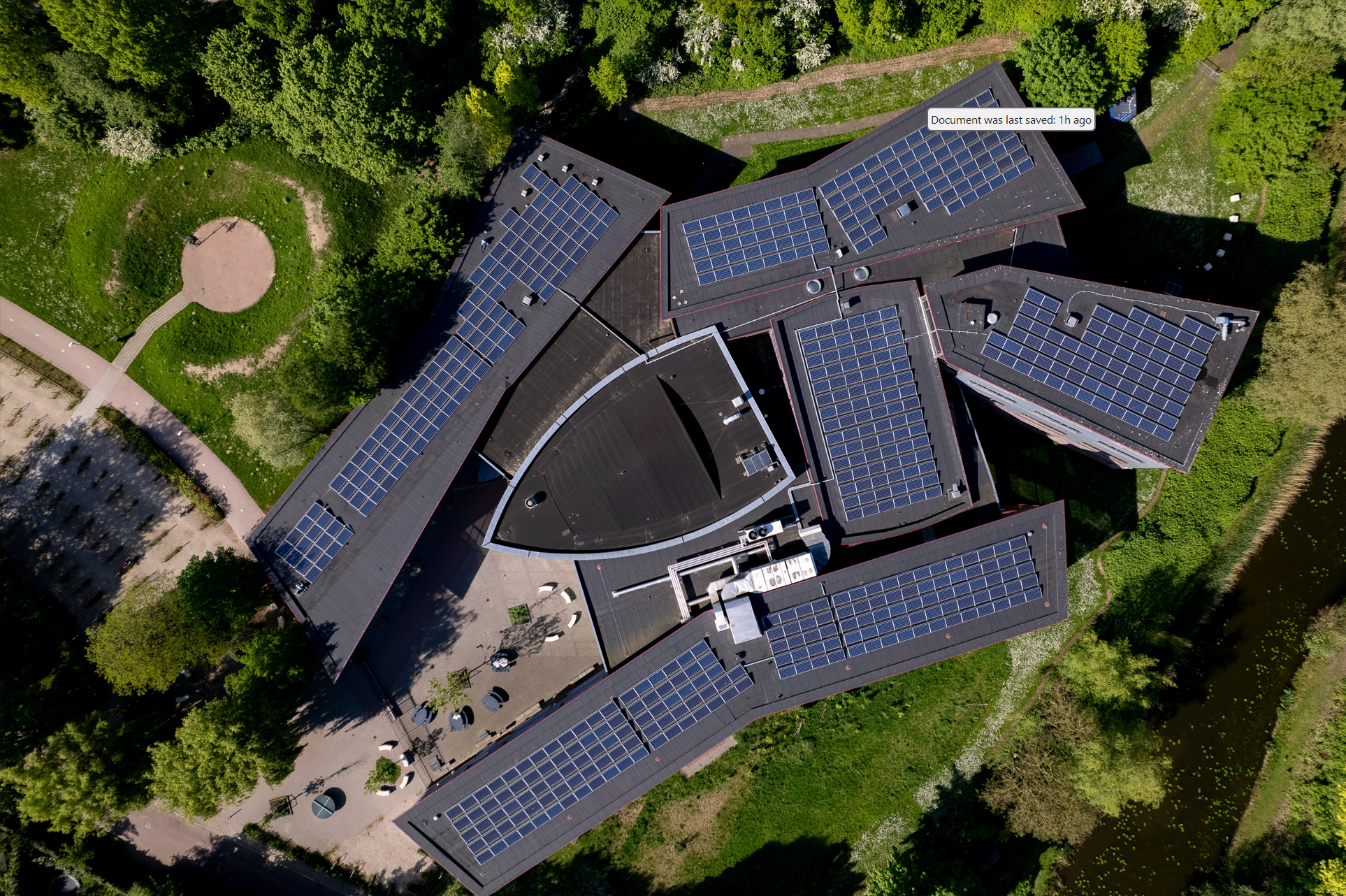
Reporting nationwide has detailed the rush to save on building electrification measures, especially when it comes to 25D. Five schools in Connecticut are putting the pedal to the metal for their rooftop solar projects, which they would be reimbursed for via direct pay. Dozens of schools in Pennsylvania are still planning to move forward with their solar installations, with extra financial support coming from Pennsylvania’s Solar for Schools program. The Midwest Renewable Energy Association, The Oneida Nation, and the City of Green Bay’s Grow Solar program in Wisconsin’s Brown, Outagamie, and Winnebago counties is busy as ever, having signed up more than 130 residents this spring, before its application deadline of September 30th. Solar installers are nearly overwhelmed by demand and are building endurance for an installation spree in states like California, Maine, and Virginia.
Resources abound for those looking to maximize savings. To start out, the Internal Revenue Service released a frequently asked questions fact sheet about the statuses and modifications of these tax credits. The Climate Program Portal’s Project Finance Hub provides many resources for those looking to fund their projects, both via federal tax credits and other funding streams. Rewiring America has a webpage dedicated to supporting homeowners with applying for and securing a rebate, finding a contractor, and planning out an upgrade; Rewiring is also hosting recurring support webinars running through October 3rd.
Of course, there also exist other governmental levels of public funding. The Buildings Hub’s Spotlights States dashboard collects state and utility opportunities to apply for rebates, tax credits, grants, and loans in 29 states nationwide and the District of Columbia. Further, some municipalities offer their own clean buildings rebates. However, these incentives are most useful when they can be stacked and braided with other programs, as illustrated by how Pennsylvania’s Solar for Schools program provided additional support enabling schools with fewer resources to plan for and complete their projects. This point is furthered with Wisconsin’s Grow Solar program — without the federal tax credit enticing more residents to join their group purchasing model, fewer folks will participate and those who do will face higher costs.
Ultimately, taking these tax credits away not only hurts individuals’ ability to finance important upgrades for their homes. It also throws most if not all of the planning that state and local governments and community organizations to craft useful and thoughtful building upgrade programs out the window.