
The United States is facing energy challenges for which rooftop solar and home batteries are a solution. Solar panels and batteries installed on homes can improve the resiliency of the electrical grid and protect homeowners from blackouts, reduce health-harming pollution from electricity production, and provide financial savings for families. In many jurisdictions across the nation, however, the process of obtaining regulatory approval to install a solar energy system or home battery is complex, uncertain and slow.
Red tape associated with the permitting and inspection process adds costs and delays families from adding solar panels or a battery to their home. Navigating complex permitting and other bureaucratic barriers can add an estimated $6,000 to $7,000 to the cost of a typical residential solar energy system. These unnecessary hurdles can deter some households from accessing these proven energy solutions and savings.
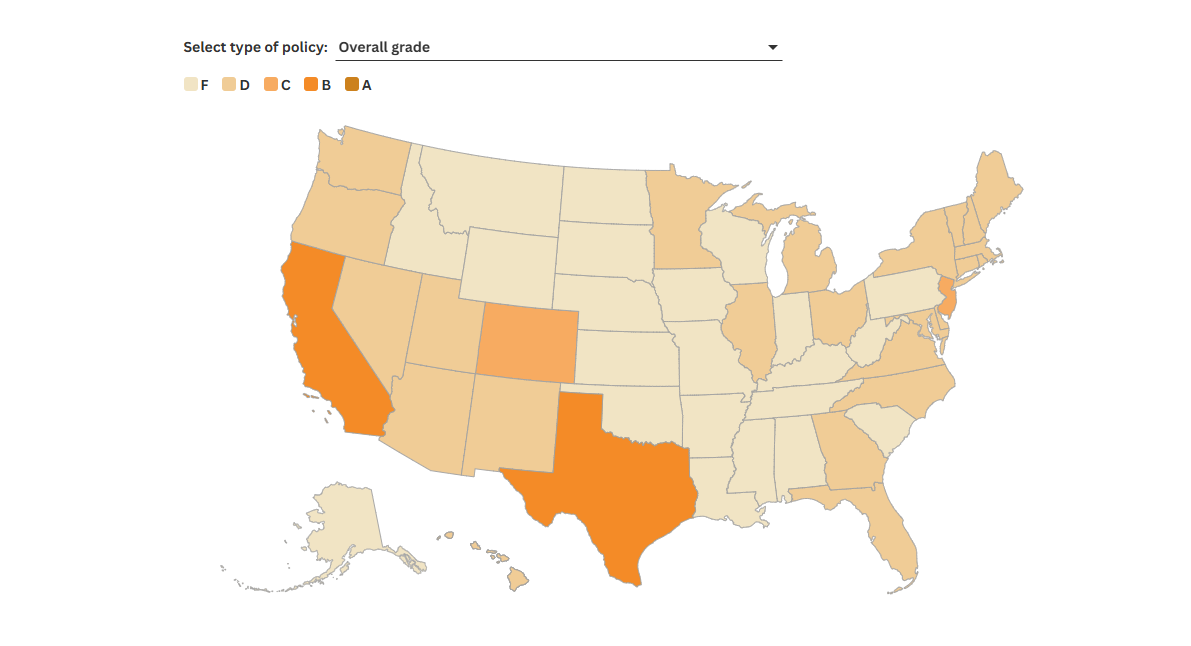
To produce this report, we reviewed policies relating to the permitting and inspection of residential solar energy systems and battery storage in all 50 states. Our review found that a majority of states have done little to adopt common-sense practices that reduce the costs and delays that permitting and inspection requirements impose on families wishing to install solar panels and batteries. Only two states – California and Texas – received a “B” in our scorecard, two received a “C,” 24 received a “D” and the remaining 22 received an “F.”
More About this Resource
Publisher: Environment America
Date: April 20, 2026
Type: Guide
Tags: Residential, Solar
Countries: Countries: None
States: National