
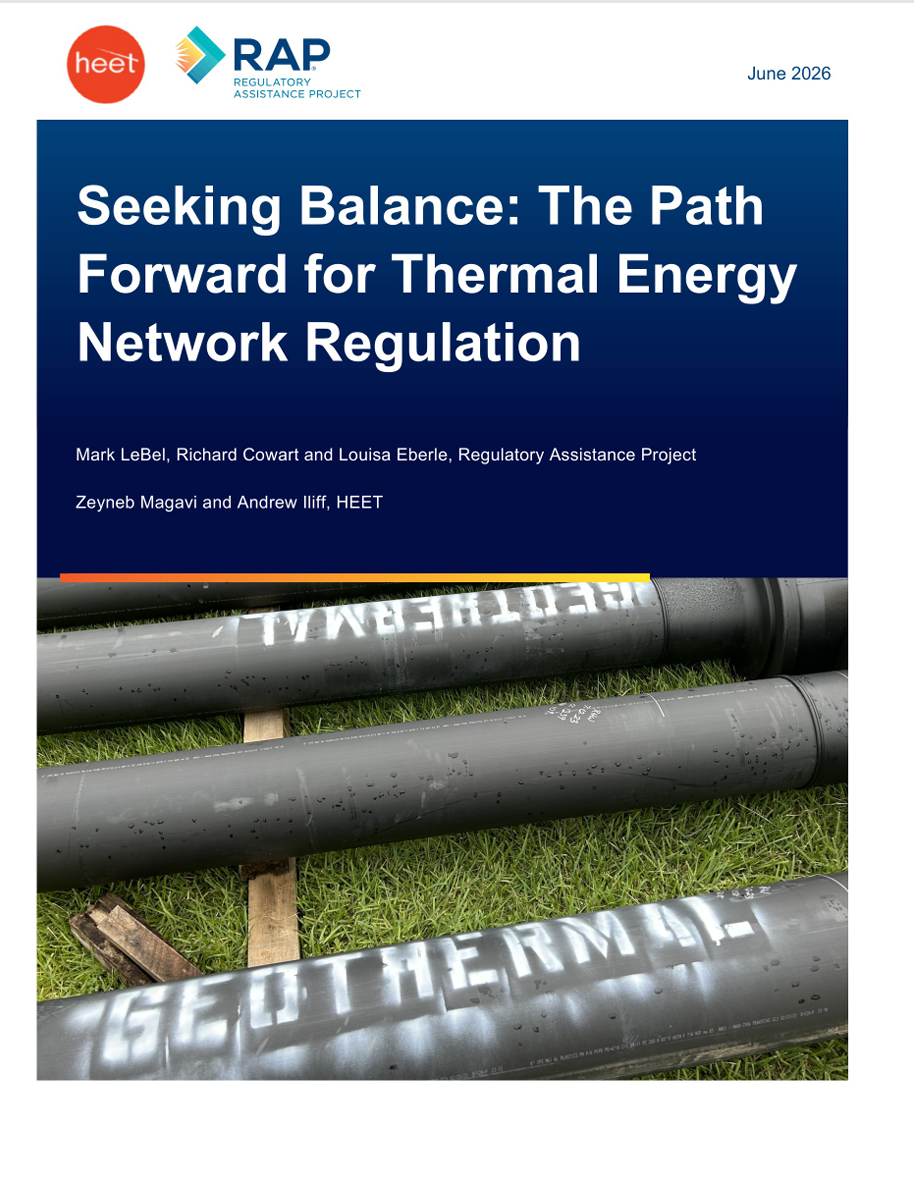
Thermal energy networks are attracting growing attention as a reliable, resilient, efficient, safe, local and clean solution for building heating and cooling. At the time of publication, one utility pilot serves 135 customers in Massachusetts with several others planned in New York, Minnesota and Colorado. Utility commissions are just starting to consider how to regulate this new shared service. This joint report by RAP and HEET recommends a balanced regulatory approach over time that allows innovation to drive down long-term costs and ensure benefits are distributed fairly. For initial demonstration projects, this should consist of reliability standards, simple rates, and rigorous data collection.
As a next step, commissions can start to develop a more rigorous regulatory framework by:
- Establishing a process to designate provider service territories for new thermal energy network service;
- Designing fair customer service agreements;
- Setting up uniform system of accounts for thermal energy networks; and
- Investigating customer metering options.
It is also important to consider how these new assets and service providers fit into the broader scope of utility oversight and energy planning. Integrated electric and gas planning is just beginning to be considered in a few jurisdictions, but thermal energy networks — as a significant efficiency option for electricity as well as an alternative to gas for heating — may spark accelerated adoption of integrated planning.
More About this Resource
Publisher: HEET, Regulatory Assistance Project
Date: June 26, 2026
Type: Report
Tags: Thermal Energy Networks
Countries: Countries: None
States: States: None