Households that spend more than 6% of their income on energy bills are considered energy burdened, and may struggle to pay energy bills. Households with high energy burdens are more likely to also experience adverse health impacts and other forms of economic stress. In the United States, low-income households carry energy burdens roughly three times higher than households with higher incomes. Increasing energy efficiency of these homes can help reduce energy bills and energy burdens. And while utility investment in efficiency programs specifically targeted to meet the needs of these households has increased over the last decade, utilities are still under-investing in these critical programs, leaving an equity gap to fill.
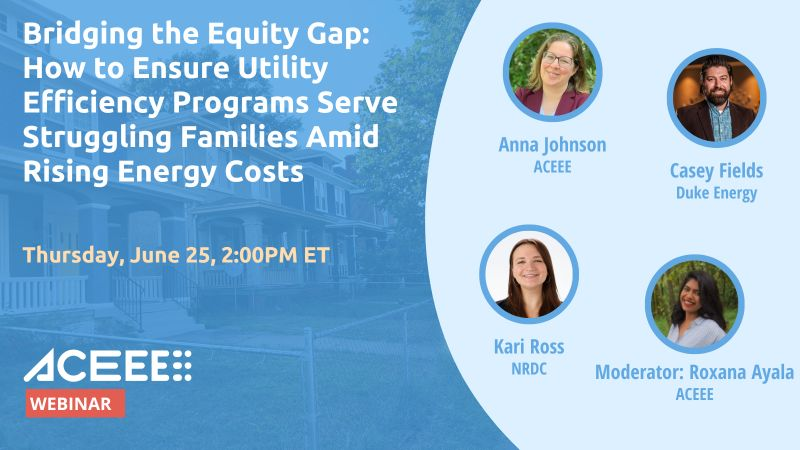
Join us to learn about new research benchmarking this equity gap in utility investments into the energy efficiency of low-income households. We will share key findings including a suite of exemplary policies, programs, and practices that can help to close these equity gaps. Attendees will also hear from speakers who will provide perspectives on how utility efficiency programs need to evolve to meet the needs of income-qualified households. Together, we will explore program designs that deliver energy savings and reduce energy burdens as well as policy strategies that help make these programs more equitable and successful.