
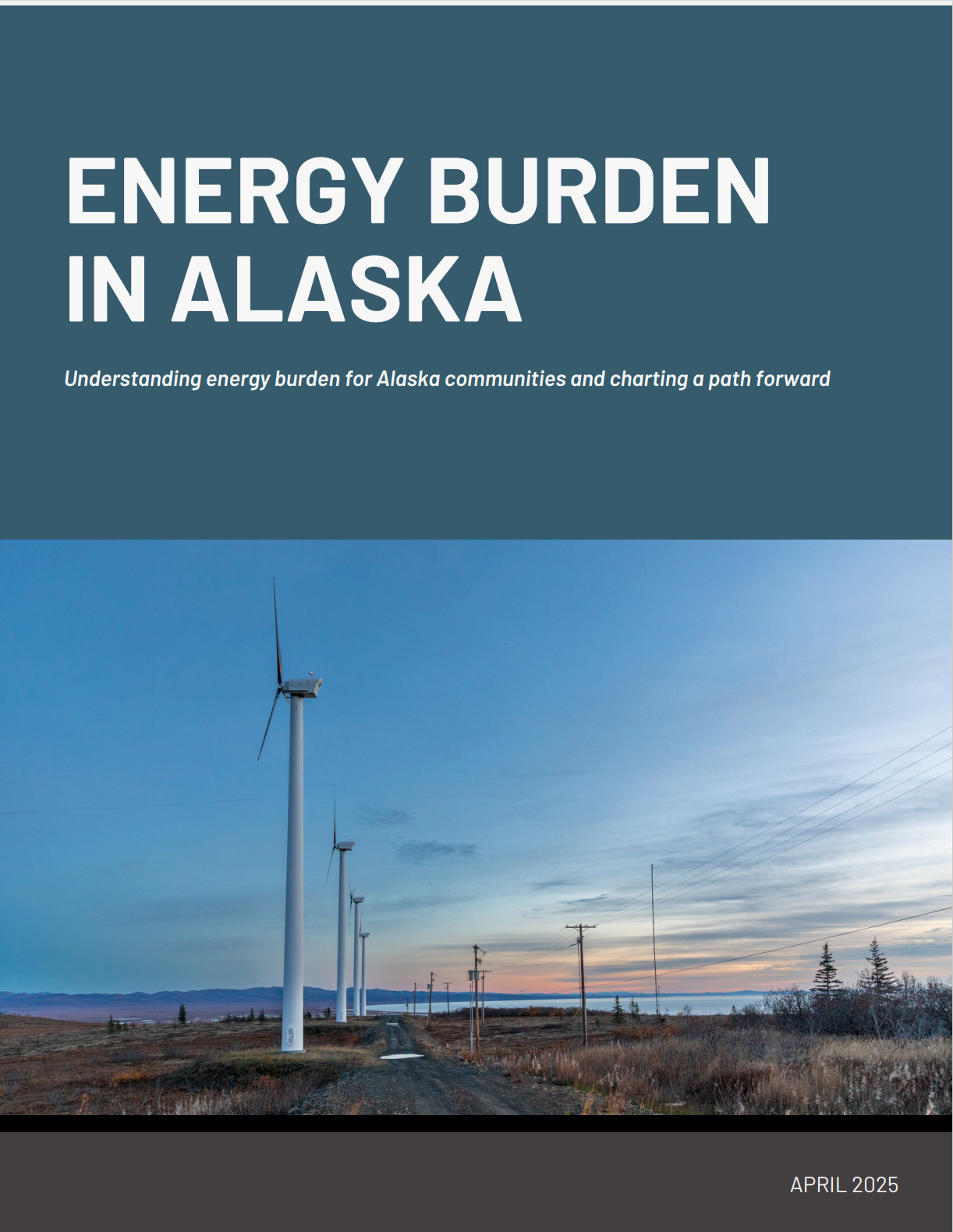
Alaska is home to some of the most extreme household energy burdens in the United States. Energy burden is the percent of annual household income spent on the annual energy costs of electricity, gas, and other home heating fuels. This reality is driven by Alaska’s geographic isolation, small and dispersed population, and limited energy infrastructure. Families across the state, particularly in rural and low-income communities, face energy costs that far exceed the national average. This can create significant economic, physical, and mental strain. Geographic isolation and limited infrastructure force reliance on small, costly diesel microgrids and socioeconomic disparities amplify these costs, particularly for low-income, rural residents with inefficient heating methods and limited fuel options. This report provides a comprehensive analysis of Alaska’s energy burdens, compares the state to national trends, explores disparities within Alaska, and examines the drivers and consequences of these inequities. The findings highlight the urgency of addressing energy affordability through targeted policy action, community-driven solutions, and investment in energy infrastructure.
More About this Resource
Publisher: Alaska Public Interest Research Group, Cook Inletkeeper, Native Movement, University of Washington Center for Environmental Health Equity
Date: September 8, 2025
Type: Report
Tags: Delivered Fuels, Energy Affordability, Energy Burden, Energy Infrastructure, Gas, Weatherization
Countries: Countries: None
States: Alaska