
Filter Selections:
Efficiency Arizona Eligibility Screening Tool
To help more Arizonans find out if they are eligible for the Efficiency Arizona program, the Governor’s Office of Resiliency launched a new resource, the Efficiency Arizona Eligibility Screening Tool.
State-Level Heterogeneity in the Price Elasticity of Demand for Residential Electricity
This paper presents updated estimates of a standard measure of price responsiveness in the US residential electricity market—the price elasticity of demand for electricity (PEDE)—and explores how it varies across states.
Retrofit Navigators: Building Retrofit Programs that Advance Climate, Housing, and Community Goals
This report from BEI outlines the issue with traditional retrofit programs and how to design better programs, including examples from programs in Philadelphia, Madison, and New York City.

Multistate Action Plan: Accelerating the Transition to Zero-Emission Residential Buildings
Recommendations for state action are organized into four categories – equity and workforce, carbon reduction obligations, codes and standards, and utility planning and regulation – using a framework introduced in a 2024 policy brief, Decarbonizing Buildings: How States Can Set the Table for Success.
Decarbonizing Space Heating in Existing Centrally Heated Multifamily Buildings
This report discusses these and other decarbonization options for centrally heated multifamily buildings, analyzing the life-cycle cost of the different options and providing examples of installations using each of these options.
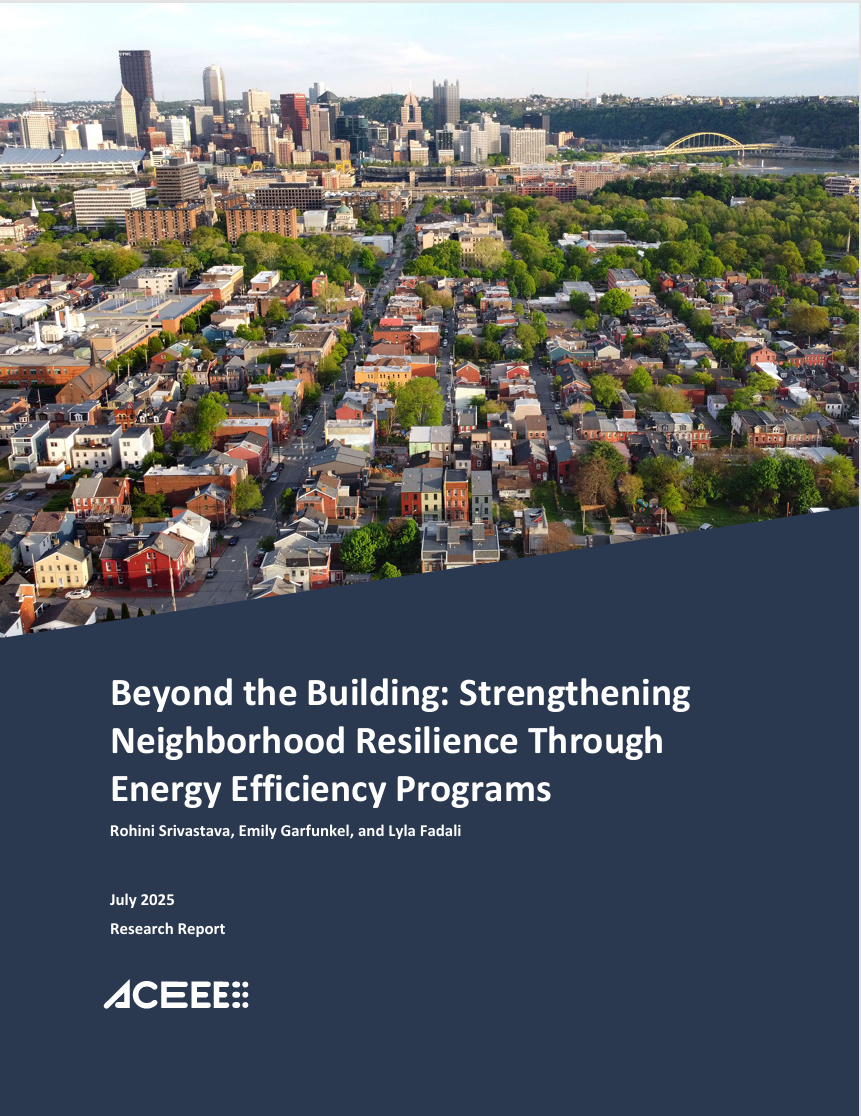
Beyond the Building: Strengthening Neighborhood Resilience Through Energy Efficiency Programs
ACEEE researchers find that energy efficiency upgrades and heat pumps installed in multiple buildings in an area provide benefits beyond each individual building by reducing local peak demand and the likelihood of outages. An analysis of commercial and residential buildings in Westchester County, New York finds that building envelope sealing and heat pumps in multiple buildings reduce summer peak demand by 8 percent and outage time by 63 percent.
Lower Bills, Cleaner Air: Heat Pump Benefits for Homes Relying on Delivered Fuels
RMI's analysis finds that households in the United States using delivered fuels for space and water heating could save an average of $970 per year by upgrading to heat pumps.
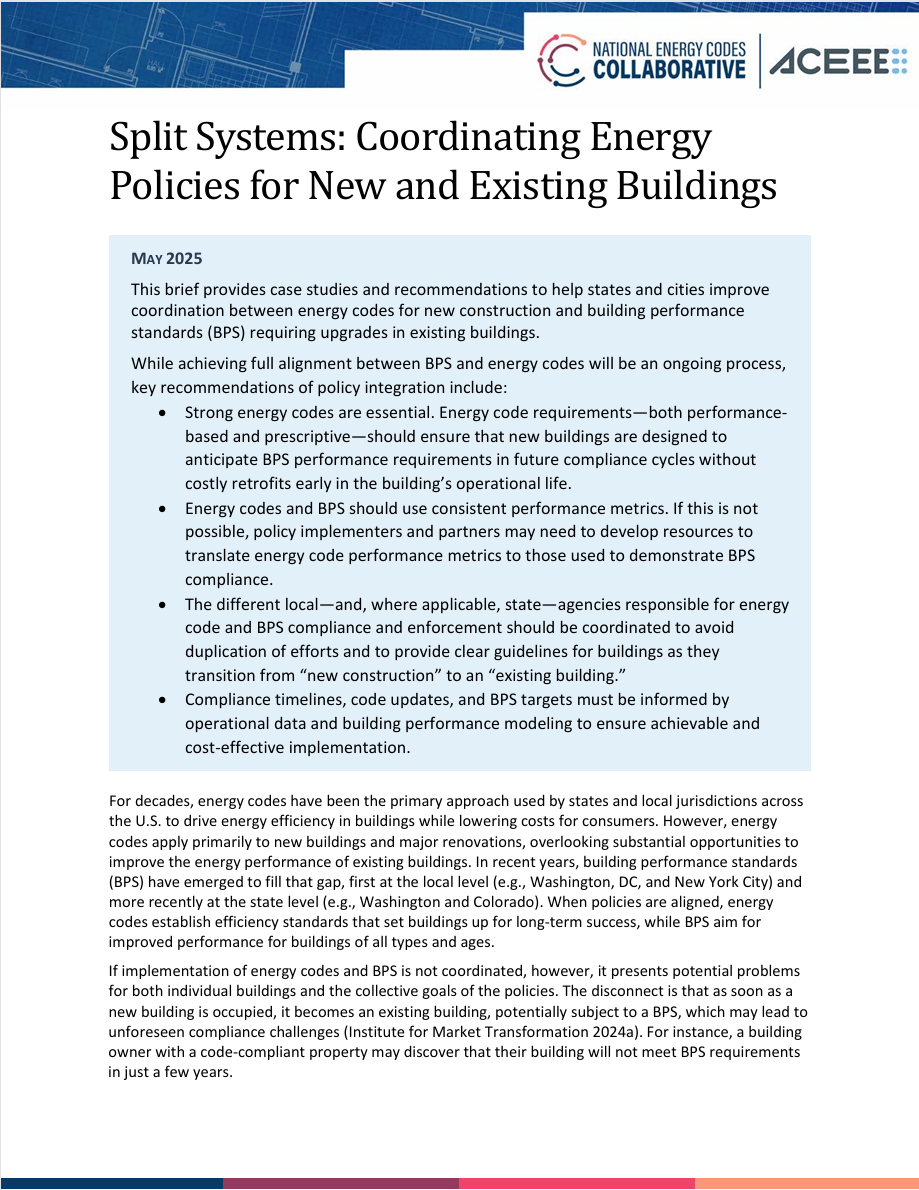
Split Systems: Coordinating Energy Policies for New and Existing Buildings
ACEEE and the National Energy Codes Collaborative examine conflicts and alignments between building codes and Building Performance Standards in Atlanta, St. Louis, and Seattle. The authors derive lessons for other cities to ensure policies to decarbonize new and existing buildings are measuring against similar performance metrics and minimizing unnecessary bureaucratic hurdles.
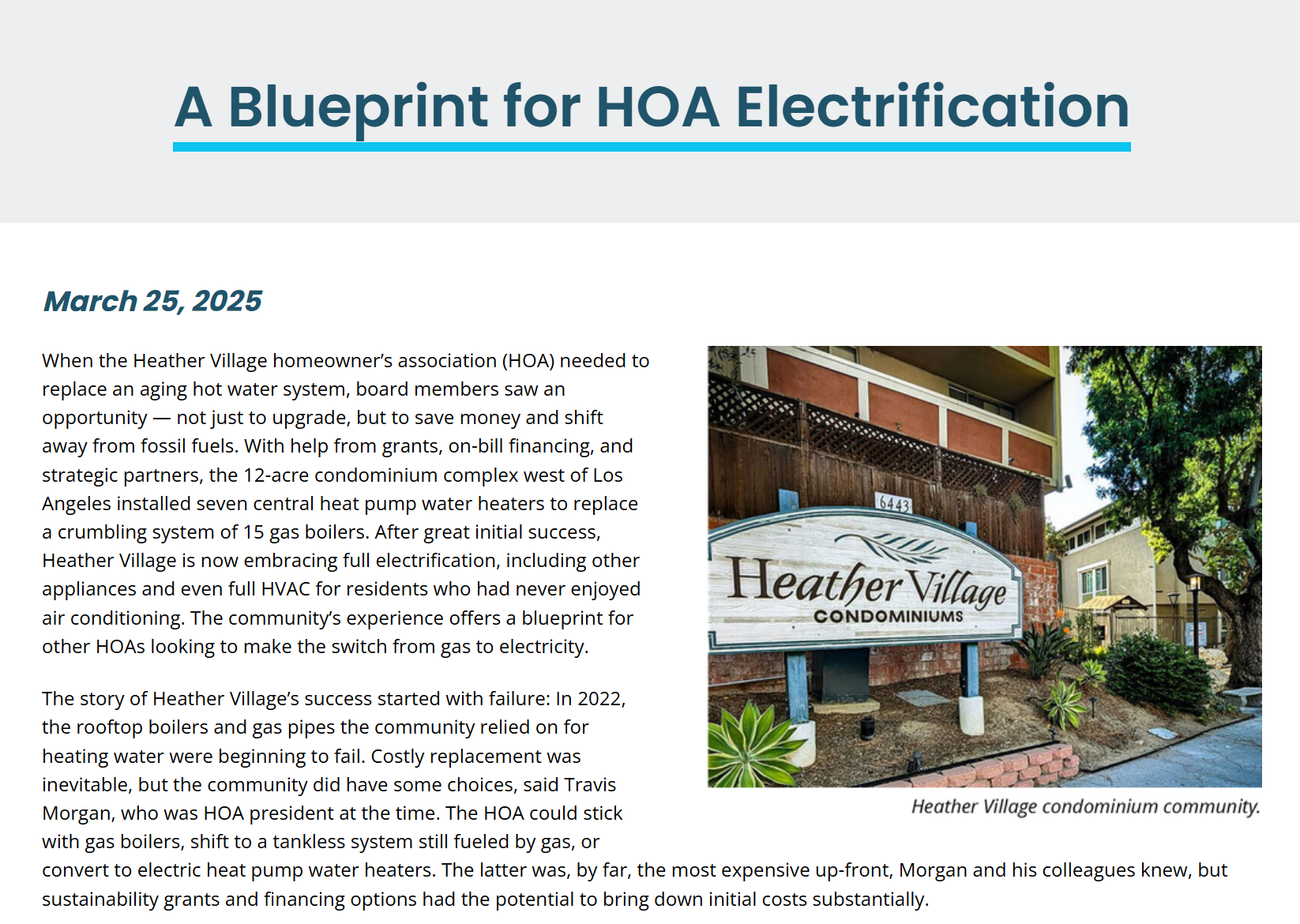
A Blueprint for HOA Electrification
This case study from TECH Clean California lays out how the Heather Village homeowner's association leveraged grants and utility financing to switch from gas boilers to heat pumps to heat its residents' water.
Thermal Energy Networks Legislative Guidebook
This resource from the Building Decarbonization Coalition examines enabling legislation for thermal energy networks across eight states and derives lessons for other states considering these policies.
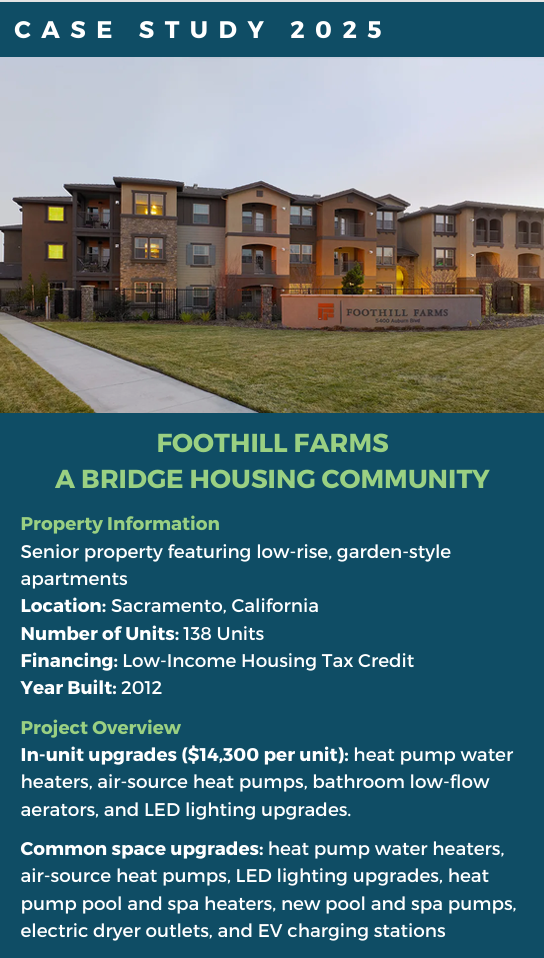
Using Necessary Upgrades to Electrify a Senior Property
This case study illustrates how BRIDGE Housing and its partner Carbon Zero Buildings completed cost-effective in-unit and common space electrification upgrades and demonstrates how changes to utility allowances resulted in financial savings for both BRIDGE Housing and residents.
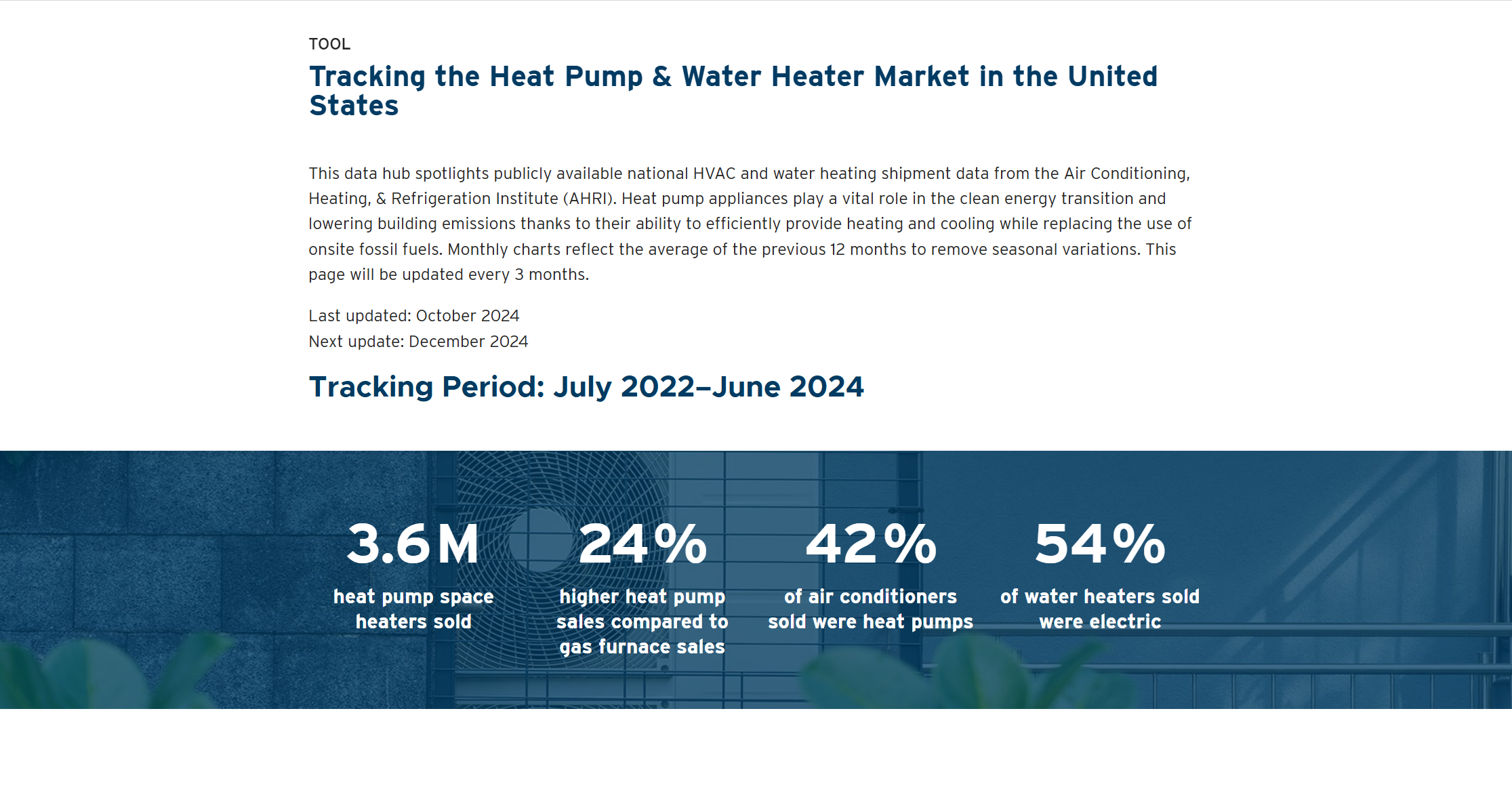
Tracking the Heat Pump & Water Heater Market in the United States
This data hub spotlights publicly available national HVAC and water heating shipment data from the Air Conditioning, Heating, & Refrigeration Institute (AHRI).