In late February, the House of Representatives passed H.R. 4758, the Homeowner Energy Freedom Act, a bill setting out to repeal three programs established by the Inflation Reduction Act, totaling more than $5.7 billion in funding. Specifically, the legislation axes the Home Electrification Appliance Rebates (HEAR), the Training for Residential Energy Contractors (TREC) program, and the Assistance for Latest and Zero Building Energy Code Adoption program. It also rescinds any unobligated funding from HEAR and the energy code adoption program. The bill was passed 210-199 almost entirely along party lines; only Representative Brian Fitzpatrick (R-PA) departed from his party.
As of March 9th, 2026, there are 13 active HEAR programs out of 54 participating jurisdictions; Idaho and South Dakota rejected their allocated funding, according to our Home Energy Rebates Tracker (Figure 1). The program is funded at more than $4.5 billion. All states and territories are also eligible for the $200 million in TREC funding—$150 million of which has been allocated—and several states have already launched their programs, including Colorado, Hawaii, Minnesota, New Mexico, and Wisconsin, as tracked by our Spotlight States Dashboard. Similarly, states and local governments with authority over building code adoption are eligible for the $1 billion Assistance for Latest and Zero Building Energy Code Adoption program. $242 million thus far has been awarded to 19 projects in 13 states.
Figure 1: Home Energy Rebates Program Statuses
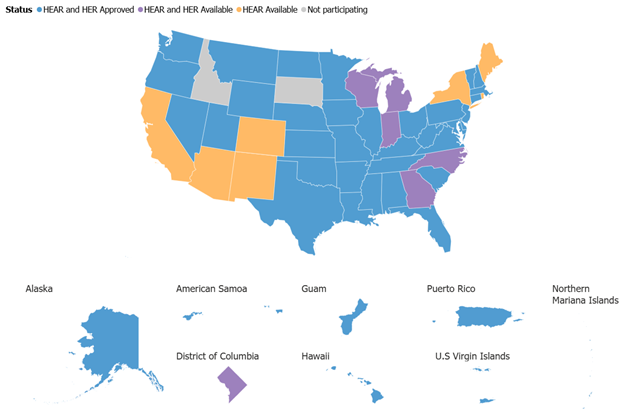
Source: Atlas Buildings Hub, Home Energy Rebates Tracker
If the bill were to pass the Senate, the almost $1 billion in unawarded and unobligated funds from these programs, about $750 million from the Assistance for Latest and Zero Building Energy Code Adoption program and about $237 million from HEAR, will be redirected toward other uses as determined by the Department of Energy. According to the Climate Program Portal’s Project Status Tracker, about $3.4 billion in HEAR funding has been obligated to states, territories, and Tribal Nations, leaving another $1.1 billion in unobligated but awarded funding left to be clawed back by the federal government. In total, the Homeowner Energy Freedom Act seeks to rescind about $2.1 billion that would have gone to fund appliance rebates and upskilling programs nationwide.
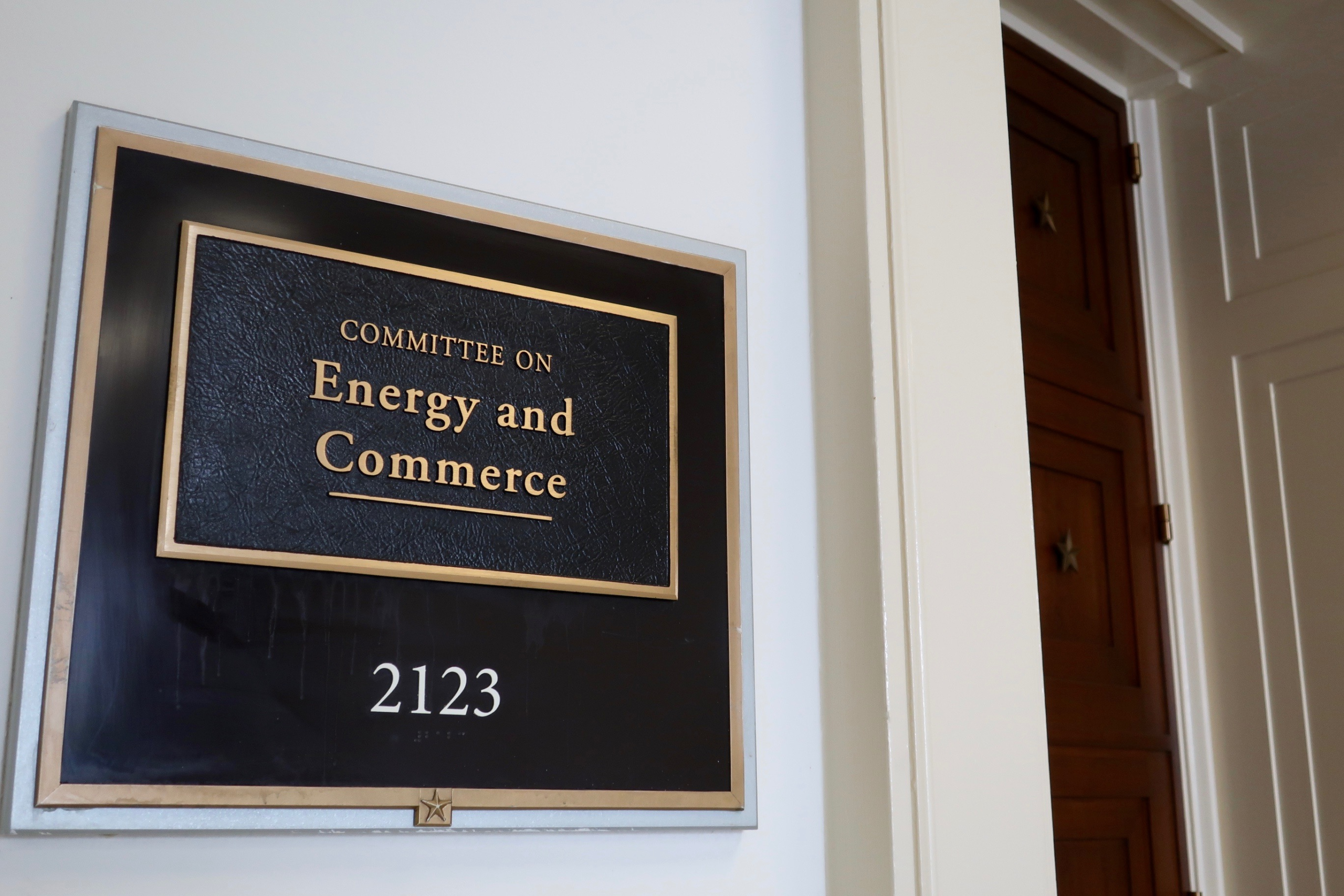
The House Energy and Commerce Committee described the bill as improving access to “cost efficient appliances” such as those fueled by natural gas and described the impetus behind IRA as subsidizing a “burdensome regulatory agenda.” Note that an April 2024 National Laboratory of the Rockies study found that energy efficient appliances are cost-effective in many households—for instance, air-to-air heat pumps are cost-effective in 59 percent (65 million) of American homes, without the application of rebates or subsidies.
The committee also claims that the Assistance for Latest and Zero Building Energy Code Adoption program drove states to comply with expensive and “aggressive” building codes. The National Association of Home Builders concurred, describing how compliance with the standards set forth—the minimum of which must be the 2021 IECC to receive grant funding from the program—is as costly as $31,000 more expensive than constructing a home in a do-nothing scenario. Supporters of the code say this is an overestimate and point out that federal estimates of upgrading from the 2009 code to the 2021 code, as many places would under this voluntary program, adds about $7,000 to the cost of construction, but yield a net lifetime savings of more than $15,000.
After passing the House, the bill is on its way to the Senate. It is not clear if and when the Senate will consider the legislation. If this money disappears, alternatives for rebates include state grant opportunities as well as utility rebates. But in most cases, these programs do not reach the scale of the HEAR program, and energy efficiency spending is already under a microscope in many states. The fate of this funding could play a major role in the viability and accessibility of home energy upgrades for many households, particularly low-income families.