What is a buildings moment that stands out to you from 2025?
Stephen: The building electrification movement won a few high-profile court cases in 2025 that really shifted the mood that had set in after Berkeley’s law was struck down. We talked to some experts about those cases on Buildings Hub Live, and it was great to break through the legalese to get at what it really means for states’ and cities’ ability to regulate their buildings.
Kat: The beginning of the Trump Administration brought an enormous wave of uncertainty to the buildings landscape. From those early months, it’s hard to pick a single moment — new tariffs, the uncertainty around the Greenhouse Gas Reduction Fund (especially Solar for All), the axing of the entire Low Income Home Energy Assistance Program’s staff, and the morass of budget reconciliation chaos all stand out.
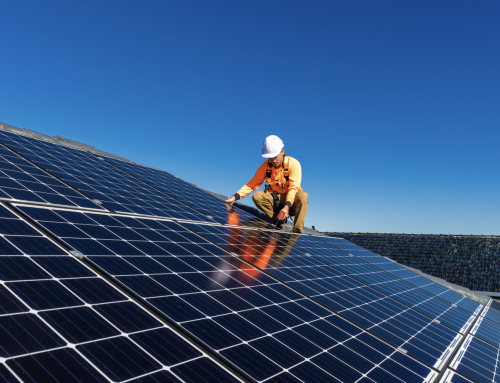
Jaclyn: One moment that stands out from 2025 was the cancellation of the EPA’s Solar for All program. Although I wasn’t surprised given the direction things have been heading, it’s still very disheartening to see the Trump administration dismantle programs that serve low-income communities.
What state actions have you seen this year that effectively fill gaps left from the federal level?
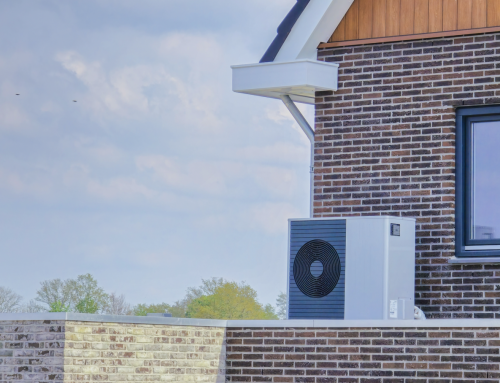
Stephen: It’s really hard for the states to fill the gaps left by the federal government. But I’m excited about the New England Heat Pump Accelerator, which is funded by a $450 million Climate Pollution Reduction Grant awarded last year. The program, which spans five states in New England, has three parts: the Market Hub, which will offer financial incentives to heat pump distributors to pass along to contractors and ultimately building owners; the Innovation Hub, which will give grants to state and local programs to assist low- and middle-income homeowners upgrade their homes; and the Resource Hub, which will help jurisdictions share resources to train contractors to install heat pumps.
Kat: We’ve continued to see a healthy flow of requests for proposals, requests for information, and public comment opportunities flow from our 29 Spotlight States and DC. These requests span tax credits, workforce development programs, home audits, clean heat, compliance assistance, and more. Our weekly Public Requests Reminder distributes a complete list of active requests and highlights newly added requests and those with soon-to-close applications.
Jaclyn: During the second half of 2025, 12 California cities adopted building codes that incentivize homeowners to replace their air conditioners with energy-efficient heat pumps, according to Heatmap News. Moreno Valley was the first city to adopt these rules back in August, followed by Los Gatos and Portola Valley, and more cities in talks about implementing similar rules. This comes at a crucial time, especially as federal incentives for electrification and clean energy have been significantly reduced or canceled.
What was your favorite Buildings Hub product or development of the year?
Stephen: The Home Energy Rebates tracker was a fun project to take on—we’d been considering doing something like it for a while, but when the U.S. Department of Energy took down its tracker, we knew we wanted to get that info back out to the people. We’ve got plans to build it out with more information on different states’ programs next year, so stay tuned!
Kat: In addition to providing data analysis and writing digests, I produce Buildings Hub Live, which is hosted by Stephen. My favorite episodes of the year revolved around progress happening at the local level, displaying how localities nationwide have continued their buildings work, even with a dearth of federal support. “Buildings Hub Live: Building Performance Standards Begin to Bloom” — with Katarina Michalova, Program Manager at the City of St. Louis, and Aidan Callan, BERDO Program Manager at the City of Boston — and “Buildings Hub Live: Delivering Better Buildings at the Local Level” — with Ryan Cassidy, Vice President of Real Estate at Mutual Housing California, and Keith Snyder, Energy Branch Manager at the Fairfax County Park Authority — underscore success stories that are replicable for other local governments and local-level NGOs.
Jaclyn: This year, I co-authored a data story called “Visualizing Energy Consumption in American Households.” Using data from the 2020 Residential Building Characteristics dashboard, we looked at how much energy households use for space heating, cooking, and water heating. This data story serves as a follow-up piece to our previous analysis on what Americans pay for heating and cooking in their homes. It was interesting to learn how energy consumption and costs vary across states, and what that means in terms of identifying opportunities to reduce energy use and costs, such as installing heat pumps or induction cooktops.
What are you looking out for in 2026?
Stephen: The big topic right now is affordability. Energy bills were a huge issue in several state races that were decided in November. How are Governor-elect Spanberger in Virginia and Governor-elect Sherrill in New Jersey going to follow through on their promises to address their constituents’ energy costs? We’ll certainly be taking a look at their policies on the Spotlight States dashboard.
Kat: Looking forward to the 2026 elections, that same narrative of affordability will likely permeate campaign trails, especially for the nine states whose Public Utility Commissions will be holding elections: Alabama, Arizona, Georgia, Louisiana, Montana, Nebraska, North Dakota, Oklahoma, and South Dakota. Something else to watch out for in the lead-up to those elections: decisions on agreements such as the $16 billion spend requested by Georgia Power, which contains a promise to “put downward pressure” on rates starting in 2029 in exchange for permission to build (and bill ratepayers for) 10 GW of mostly gas generation for data centers. The Georgia Public Service Commission will vote on the deal on December 19th.
Jaclyn: I’m excited to see how building decarbonization and electrification continue to grow in 2026, especially at the state and local levels. Even in the face of federal rollbacks, growing uncertainty and a lack of federal support for clean energy initiatives, state and local governments are stepping up to the challenge. They’re implementing their own policies and programs and finding that reduce emissions, improve energy efficiency, and tackle climate change. For example, New Jersey signed legislation to expand its Community Solar Energy Program, bringing 3,000 MW of new community solar projects by 2029. Massachusetts also launched a new redesigned Solar Massachusetts Renewable Target (SMART) incentive program. I look forward to seeing how these efforts unfold and how states and cities continue to address these challenges in the years ahead.